


On a translated page the Posts, Loop Grid and Loop Carousel widgets list the translated posts in the translated loop item, with their labels and separators translated. For the full Elementor setup, read how to translate an Elementor website with WPML.
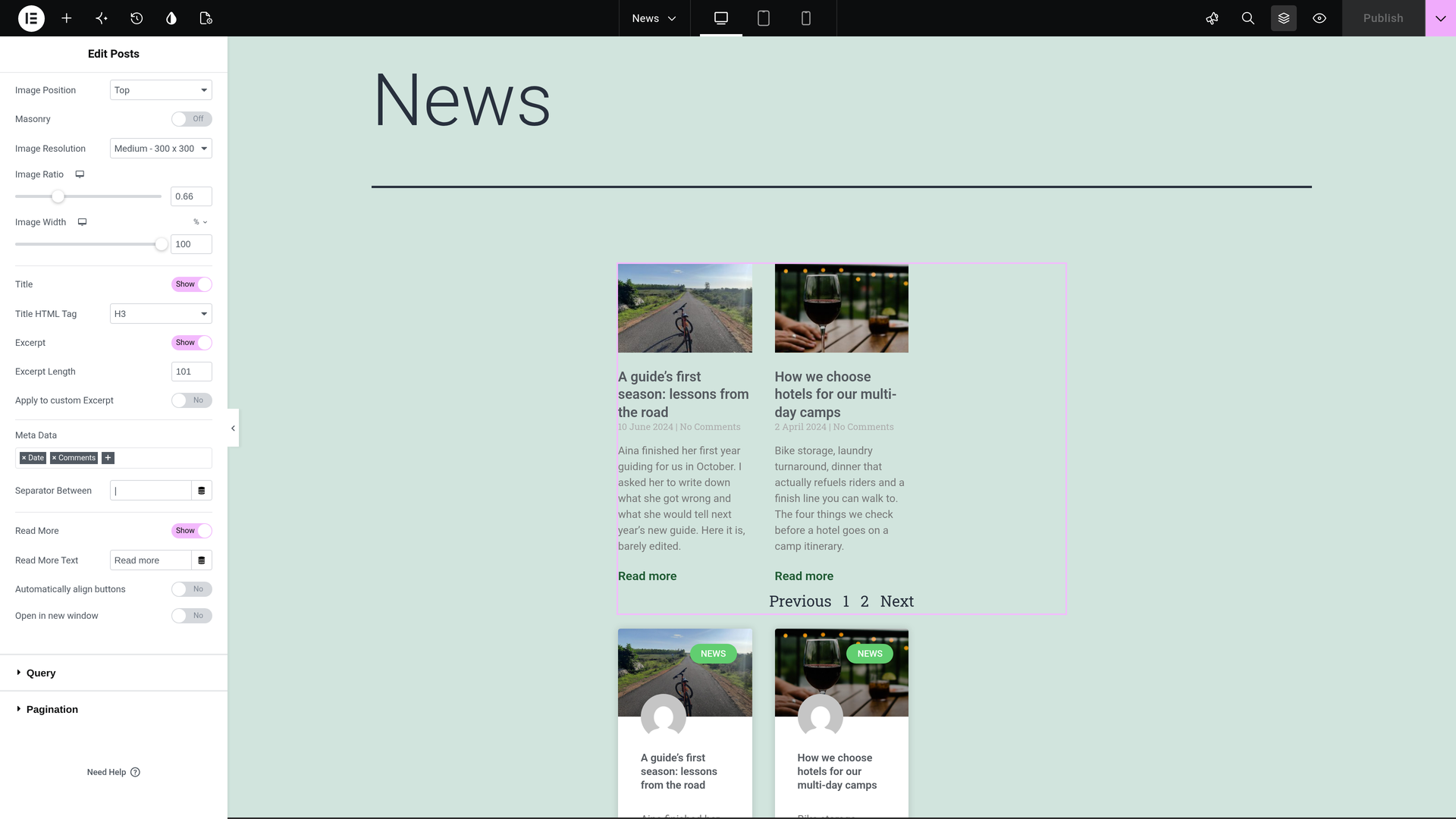
Why the Lists Follow the Page's Language
A list widget asks WPML for the posts in the language of the page it is on. A translated page lists the translated posts. A language with no translated posts has nothing to list, until you tell WPML to show the original posts there.
What You Need to Do
A Loop Grid or Loop Carousel shows each post in a loop item, an Elementor template. The loop item is translated with the page, as its own item.
With Translate Everything On: Nothing
If you use PTC and your site is on Translate Everything, WPML translates the whole site, this page, its loop items and your posts included. You do not need to do or review anything. WPML translates your posts as you publish them, so every list fills in each language.
You set it up in the Translate Everything Automatically box at the top of WPMLTranslations. Read how to translate everything automatically.
With Translate Everything Off: Send the Page and Its Loop Items from the Translation Dashboard
You choose what to translate and when.
- Open the Translation Dashboard. Go to WPMLTranslations. The page is in the Pages section, and its loop items are in the Elementor Templates section.
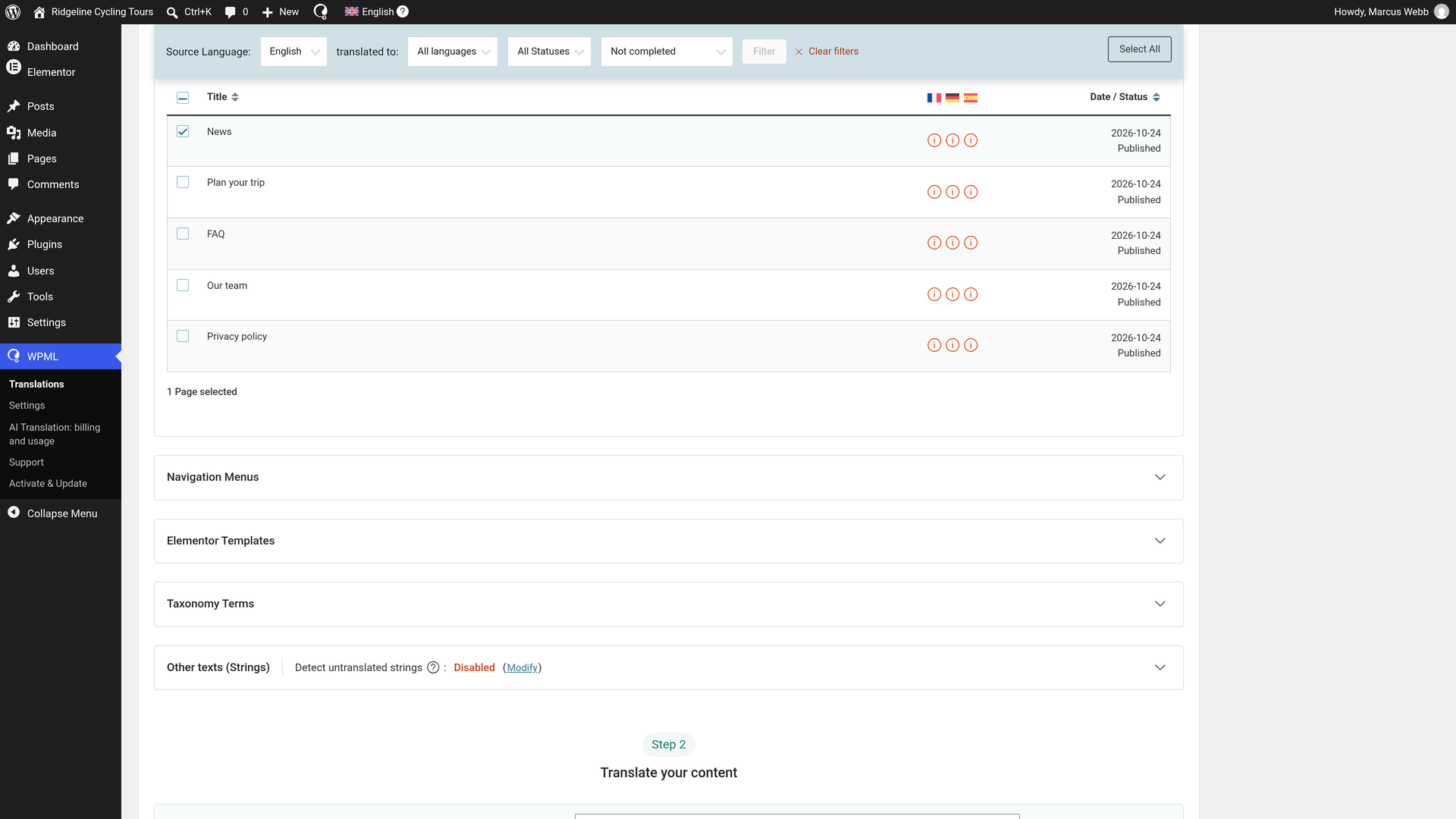
- Select the page and its loop items. Check the box next to each.
- Choose automatic translation. Under Translate your content, choose Translate automatically for each language.
- Choose Publish without review. Under What would you like to do when WPML finishes translating your content automatically?, choose Publish without review (Recommended). Translations from PTC are ready to publish, so they go live as soon as they are done.
- Send them. Click Translate content. A popup confirms Sent for translation.
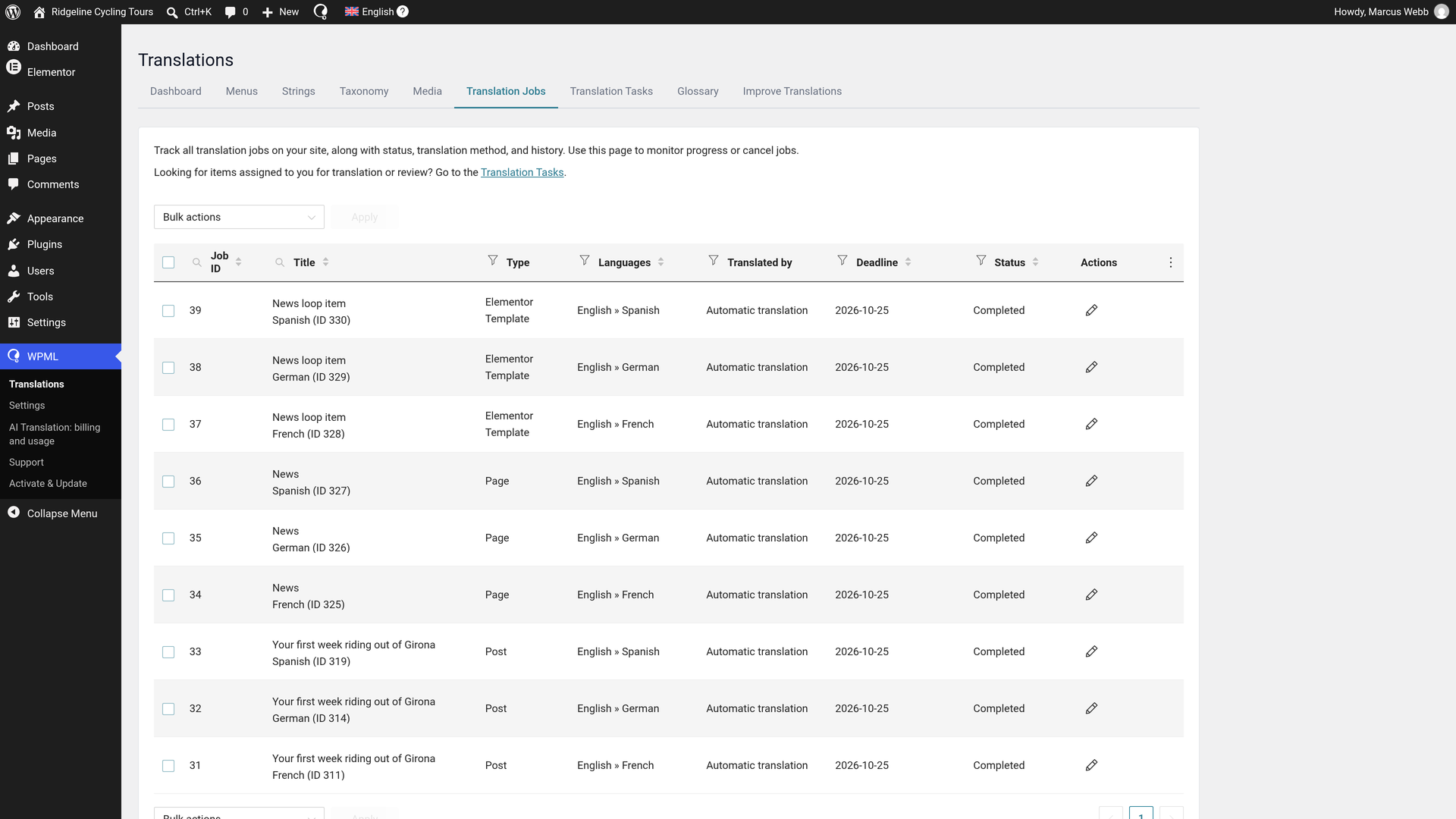
The translations complete in minutes and are live. In Translation Jobs, each job shows Completed. There is nothing more you need to do. When you edit the page or a loop item later, send it again.
Read more about the Translation Dashboard.
What Elementor Posts, Loop Grid and Loop Carousel Show on a Translated Page
- The translated posts. Each widget lists the translations of the posts it lists in your default language.
- Translated texts. The read more text, the pagination labels and the meta separators are translated with the page.
- Translated terms. A taxonomy loop lists the translated category or tag.
- The loop item of the page's language. A translated page shows its items in the translated loop item. A language with no translated loop item uses the original one.
- The right loop items in the editor. When you open a translated page in Elementor, its Loop Grid and Loop Carousel open the loop items of that page's language.
To translate the categories and tags themselves, read how to translate taxonomy.
See the Translated Lists
You can look at the translations to see for yourself. Visit the translated page in any of your other languages.
- The lists show the translated posts in the translated loop item.
- The read more text and the pagination labels read in that language.
If You Want to Change a Translation or Translate Post Lists Yourself
You do not need to check anything. If you want to change a text, do it this way:
- Open Translation Jobs. Go to WPMLTranslationsTranslation Jobs.
- Click the pencil on the job's row. The page and each loop item have their own job. Use the row of the job and the language you want. The pencil's title is Edit Translation. The Advanced Translation Editor (ATE) opens with every text of that job.
- Edit what you want. Change any text in the editor.
- Click Save and Complete. Always finish this way, even with no change. Otherwise the job stays In progress.
When you use PTC, it learns from your edits, so you do not need to keep making the same corrections.
Translate the Page and Its Loop Items Yourself
To translate them yourself from the start, choose it when you send them:
- Send the page and its loop items from WPMLTranslations as above. In the Dashboard's step 2, choose Translate myself instead of Translate automatically.
- The jobs then wait in the Translation Tasks tab. Click Translate on each.
- Translate the rows in the Advanced Translation Editor and click Save and Complete.
What You See in the Translation Editor
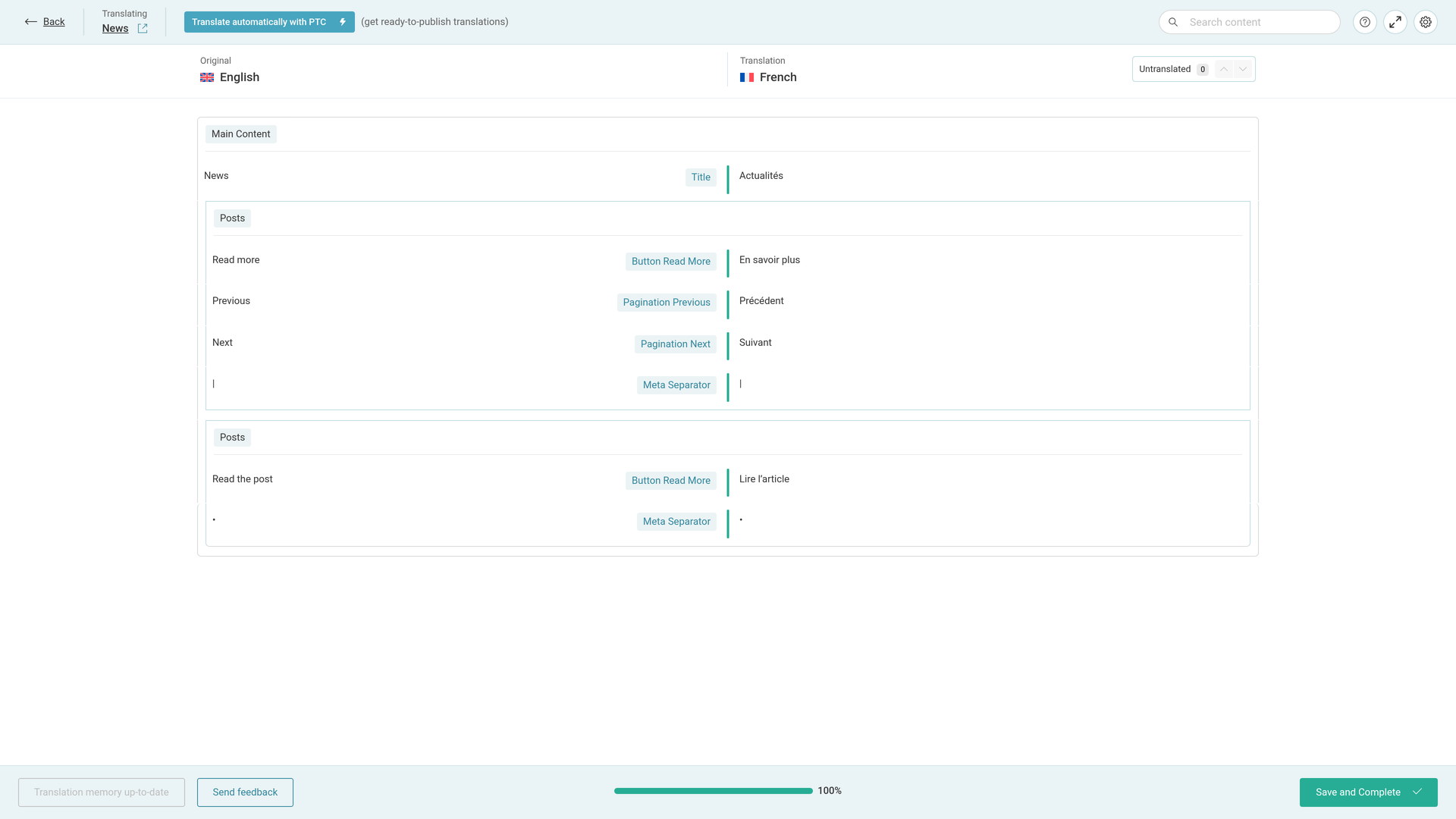
Each Posts widget has its own Posts group. In our example, French, automatic translation gave these texts:
| Original | Label in the editor | Translation (our example) |
|---|---|---|
| Read more | Button Read More | Lire la suite |
| Read the post | Button Read More | Lire l’article |
| Previous | Pagination Previous | Précédent |
| Next | Pagination Next | Suivant |
| | | Meta Separator | | |
| • | Meta Separator | • |
A separator symbol stays as it is. If a language writes it differently, change it in its row.
Show Posts in a Language You Have Not Translated Yet
- Set your posts to Display as translated. A list on a page in that language then shows the original posts.
- If the widget filters by a category or a tag, set that taxonomy to Display as translated too. Without this setting the list is empty. This is by design: WPML looks for the category in that language, finds none, and shows no posts.
Read how to display untranslated content on pages in secondary languages.
Want a different loop item design in one language? Read how to create different Elementor templates per language.
Building a site for a software company that publishes release notes as posts? The same translation system also translates the product's documentation and user interface with Private Translation Cloud (PTC) for software.
